
Learn when a damaged window needs repair or replacement, compare common warning signs, and plan a practical upgrade that improves comfort and safety today.
Windows rarely fail all at once. Usually, the trouble arrives in little ways. One room feels colder than the others, and outside noise suddenly seems louder. The glass fogs up, even though nobody has touched the shower. Something feels off, but not quite urgent. Still, a problem window deserves attention. It affects comfort, energy use, security, and sometimes the surrounding wall. However, homeowners do not always want a sweeping renovation. So, the smarter move begins with figuring out whether the issue belongs to the glass, the frame, the installation, or the entire window system.
Start With the Problem Window
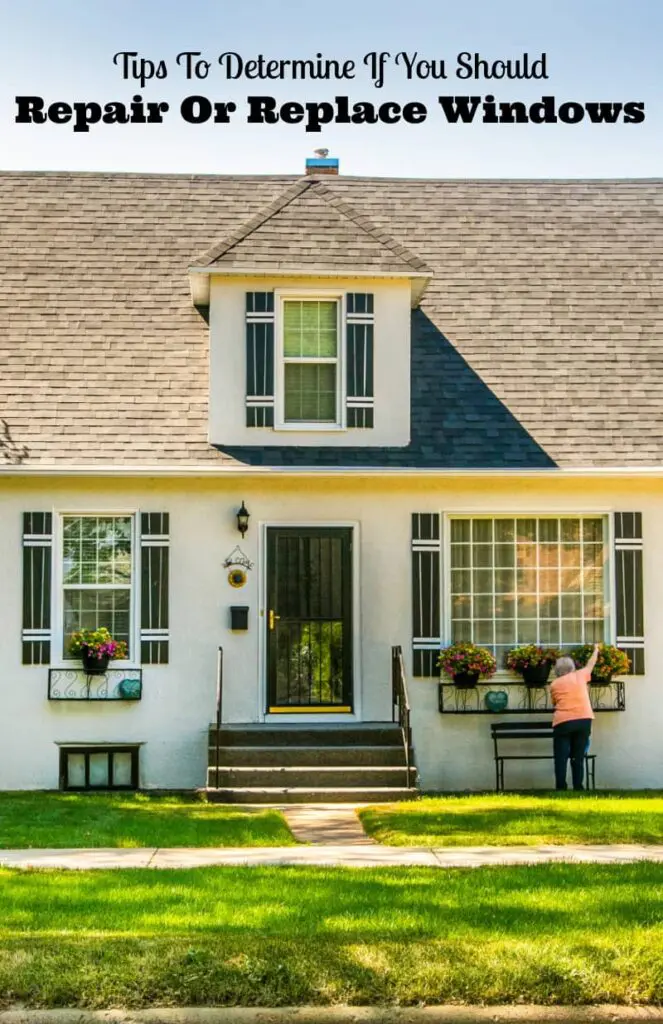
Fortunately, replacing just a window and not the frame might be a positive, sensible home update when the damage stays isolated. It helps in the following ways:
- Keeps the project manageable
- Limits disruption around children and pets
- Allows the family to address the weakest part of the home without tearing into perfectly functional areas
That said, an isolated replacement works best when the surrounding windows remain structurally sound. If several units show similar problems, replacing one may only postpone a larger project.
Some window problems respond well to –
- Fresh caulk
- New weatherstripping
- Adjusted hardware.
Meanwhile, other window conditions suggest deeper deterioration.
Therefore, the first inspection should look beyond the most obvious crack, draft, or stubborn sash. Here are more details to help you determine the scope of your project.
Signs That a Window Needs More Than a Quick Repair
Are you wondering if you need new windows? Consider how they perform. For example, a draft near the trim may come from a small air gap. On the other hand, softness in a wooden frame might point to moisture damage that has already moved beneath the surface.
Watch for a combination of warning signs rather than one small annoyance:
1. Persistent Condensation Between Panes
Usually, moisture trapped inside insulated glass signals a failed seal. It is not ordinary indoor humidity.
2. Visible Frame Decay
The following issues may indicate prolonged water exposure:
- Crumbling wood
- Deep cracks
- Recurring mold.
3. Difficult Operation
Sometimes, a sash might stick, drop, or refuse to lock. This can create safety concerns, particularly in children’s rooms.
4. Noticeable Temperature Changes
A consistently hot or chilly area near the window may reveal poor insulation or uncontrolled air leakage.
Meanwhile, do not overlook changes outside the house. For instance, the following issues can reveal drainage or installation problems:
- Peeling trim
- Gaps around the frame
- Water stains below the sill
Obviously, a new window will not solve much if rainwater still travels behind the siding.
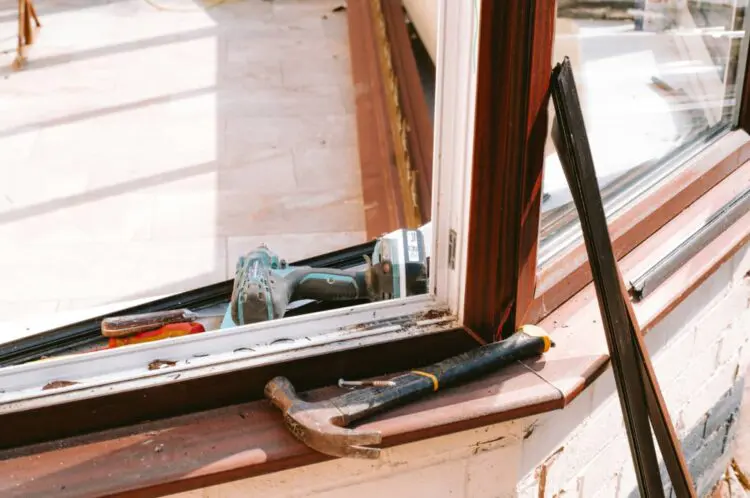
When to Repair Verses Replace Windows? A Quick Comparison
The decision becomes easier when the window’s condition guides the plan (not its age alone). An older window may remain serviceable with basic maintenance. Conversely, a newer unit with faulty installation might need substantial correction.
| Window Condition | Repair May Be Enough | Replacement May Be Better |
| Minor draft near the edge | Add weatherstripping or renew caulk | Replace if the frame has warped |
| Loose lock or handle | Install new hardware | Replace if the sash no longer aligns |
| Single cracked pane | Replace the glass where practical | Replace if multiple panes or seals have failed |
| Rot around the sill | Repair a small, dry, stable area | Replace when decay feels soft or widespread |
| Fog between glass panes | Limited seal solutions may help temporarily | Replace the insulated glass unit or window |
| Repeated water intrusion | Correct exterior drainage and sealing | Replace if moisture has damaged the frame |
Of course, appearance matters too. For instance, a mismatched window might bother homeowners. This is especially true across the front of a house. Nevertheless, performance should come first. Make sure to match the following options to preserve a consistent exterior:
- Color
- Grille patterns
- Frame depth
- Glass tint
How much does it cost to replace a window?
I’d expect a standard double-hung vinyl replacement to often land around $500–$1,000 per window installed, with premium brands potentially considerably more. If you’re replacing several windows at once, you can sometimes get a substantially better per-window price. Get multiple estimates. I got one estimate for $5000 and another for $20,000. Look at company reviews and compare quality of windows.
Before You Replace A Window, Think About the Room and How the Family Uses It
A bedroom window has different demands from a decorative window above a kitchen sink. In general, bedrooms may require an opening large enough for emergency escape, depending on local rules.
Bathrooms need privacy and moisture resistance. Meanwhile, playrooms benefit from secure locks and glass suited to active family life.
Location also changes the comfort calculation. For instance, a west-facing window may collect intense afternoon heat, while a street-facing unit may need better sound reduction.
So the best replacement isn’t automatically the most expensive option. Instead, choose the one that fits the room’s actual needs.
Therefore, before choosing a window, consider ventilation habits as well. Although a fixed window may provide excellent efficiency, it cannot release cooking smells or freshen a stuffy room. Likewise, a complicated opening style may become irritating if furniture blocks access.
How To Prepare for Installation Day
Even a one-window project creates dust, noise, and foot traffic. Thankfully, a little preparation keeps the day from turning into a household circus.
- Move furniture away from the work area
- Remove curtains and blinds
- Take fragile objects off nearby shelves.
In addition, plan a quiet space for pets and young children. Basically, installers need a clear route between the entrance and the work area. So, move toys, backpacks, and loose rugs elsewhere.
Also, before work begins, discuss –
- Interior trim
- Exterior sealing
- Cleanup
- Disposal of the old materials.
Best Advice:
After installation, test the window rather than simply admiring the clean glass. Open it, close it, lock it, and check the edges. Also, review how the exterior has been sealed. Small concerns are much easier to address while the work is fresh.
Conclusion
A single failing window does not have to trigger a whole-house remodel. Instead, careful inspection will separate a manageable repair from a necessary replacement. So, before deciding, consider –
- Comfort
- Moisture
- Operation
- Safety
- Condition of the current window frame
- Cost
Ultimately, the goal is not merely a newer window. It is a room that feels steadier, quieter, safer, and easier for the family to use. That may sound like a modest change. However, around a busy home, modest changes mostly carry the most everyday value.
Related Posts:
Thrifty Window Herb Garden: What, Why, and How
5 Window and Christmas Door Decorations That Will Wow Guests
Leave a Reply